


Why Sad Music Can Feel Comforting

There are nights when a cheerful song feels almost rude. The room is quiet, your head is full, and a bright chorus arrives as if it has mistaken the weather. Then a slower, sadder song comes on. Nothing in your life has been fixed, yet the song somehow fits the size of the moment. This is one reason sad music can feel comforting without pretending the difficult feeling has disappeared.

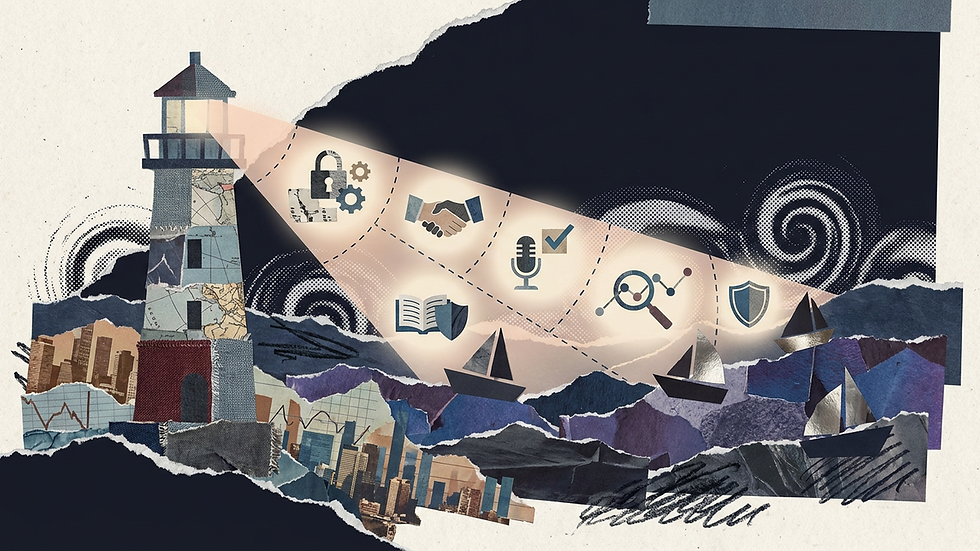
Ilustrasi editorial HP MUSIC untuk Why Sad Music Can Feel Comforting
That is the strange part: music can carry sadness and still feel good to stay with. Not always. Not for everyone. But often enough that psychologists and music researchers have spent years asking why we sometimes choose music that seems to move in the same direction as pain.
How Sad Music Creates a Safe Emotional Frame
A sad song can let us approach difficult emotions inside a frame. It has a beginning, a shape, and an ending. We can step closer to grief, longing, tenderness, or nostalgia without the song itself creating the real-world loss behind those emotions. That distance can make the experience feel safer, more reflective, and sometimes even beautiful.
A systematic review reports that sad music can be pleasurable when the experience is non-threatening, aesthetically pleasing, and psychologically beneficial. Read the systematic review.
Emotion as a Container
Think of emotion as water with no container. When something hurts, it can spread into everything: the commute, the ceiling above your bed, the messages you do not want to answer. A piece of music can give that feeling edges. Tempo, harmony, phrasing, timbre, silence, repetition, and the return of a chorus can turn a vague emotional cloud into something we can follow for three or four minutes.
That does not mean the music is therapy by default. It means structure can change the way attention moves. Instead of only being inside the feeling, we are also listening to it. The emotion becomes an experience with form.
A large online survey found that sad music can support regulation of negative emotion and mood and can provide consolation. Read the study.
Recognition in Music
One reason sad music can feel close is that music does not require us to explain ourselves in complete sentences. A voice can crack. A chord can delay its resolution. A melody can keep reaching upward and fall back. A room-like reverb can make the singer feel far away, while a dry vocal can make the same sadness feel almost uncomfortably near.
None of those musical cues has one universal emotional meaning. Context changes them. Culture changes them. The listener changes them. But music can create a language for a feeling before we have found our own words for it.
That is why the comfort is sometimes less like ‘cheering up’ and more like being accurately accompanied. The song is not telling you that everything is fine. It is telling you that the emotional weather you are standing in has a shape someone else can also hear.
Different Kinds of Sad-Music Experience
Survey research has identified distinct experiences including comforting sorrow and sweet sorrow, while also finding that genuinely negative experiences can occur. Read the research.
That distinction matters because “sad music” is not one emotional outcome. The same broad label can contain comfort, tenderness, reflection, or an experience that simply feels worse.
Memory and the Shape of Sadness
You can hear the same recording at nineteen and at thirty-nine. Technically, it is the same master. Psychologically, it may not be the same object at all.
A song can become attached to a bus route, a first apartment, a person who used to call every night, a parent’s car, a hospital corridor, a school farewell, or a version of yourself that no longer exists. Years later the music does not only retrieve a melody. It can retrieve a scene.
The evidence does support a more modest point: survey research has found patterns described as comforting sorrow and sweet sorrow alongside genuinely negative experiences. Read the survey research.
This helps explain why one sad song can be unbearable at first and strangely warm later. The waveform did not heal. Your relationship to the memory changed.
Emotional Contrast and Matching
Sometimes we choose emotional contrast: we are low, so we want something bright. Sometimes we choose emotional matching: we want the music to meet us where we already are. Both can make sense.
Mood-congruent listening can provide validation and reflection, but the outcome depends on the listener, the moment, the song, and what happens during the listening. A track that helps one person process an emotion may deepen rumination for another. The useful question is not ‘Is sad music good or bad?’ but ‘What is this music doing to me right now?’
Do I feel more understood, more spacious, or more able to name what I feel?
Am I remembering something with tenderness, or looping the same thought more painfully?
After the song ends, do I feel a little more grounded—or more trapped inside the feeling?
The Role of Music Itself
We often talk about sad music as if sadness lives only in the lyrics. It does not. Instrumental music can evoke sadness too. Slower tempo, softer dynamics, certain melodic contours, timbral darkness, sparse arrangement, harmonic expectation, and expressive timing can all participate in how sadness is perceived—but no single ingredient is a sadness button.
A minor chord is not automatically sad. A slow song is not automatically sad. A violin is not automatically sad. What matters is the relationship among cues, the performance, the surrounding style, and the listener’s learned expectations.
This is where musical language and human context meet. The mechanism is never only ‘inside the chord,’ and it is never only ‘inside the listener.’ The experience is built between them.
When Sad Music Is Not Comforting
There is an easy mistake here: turning a nuanced research finding into a slogan such as ‘sad music is therapeutic.’ That is too strong. Music listening is not a universal treatment, and distress is not something a playlist should be expected to solve.
If a song repeatedly intensifies anxiety, hopelessness, painful rumination, or a memory you do not feel ready to revisit, stopping is a valid response. Comfort is not measured by how much sadness you can tolerate.
The strongest version of this idea is therefore modest: sad music can sometimes support reflection, regulation, empathy, memory, aesthetic pleasure, or a sense of companionship. Sometimes it does none of those things.
The Human Return
Maybe comfort does not always mean feeling better. Sometimes it means feeling less alone inside what already exists.
A sad song can make a room feel bigger. It can put a frame around a memory. It can turn an emotion from something shapeless into something we can hear move from beginning to end. And sometimes, when the last note disappears, the sadness is still there—but it has become a little easier to sit beside.
Where to Bounce Next
If this article made you curious, the next useful questions are: Why can one song unlock an old memory instantly? What makes a voice sound intimate? Why does reverb make distance feel emotional? And why can a chord feel unresolved even before we know its name?




Comments